
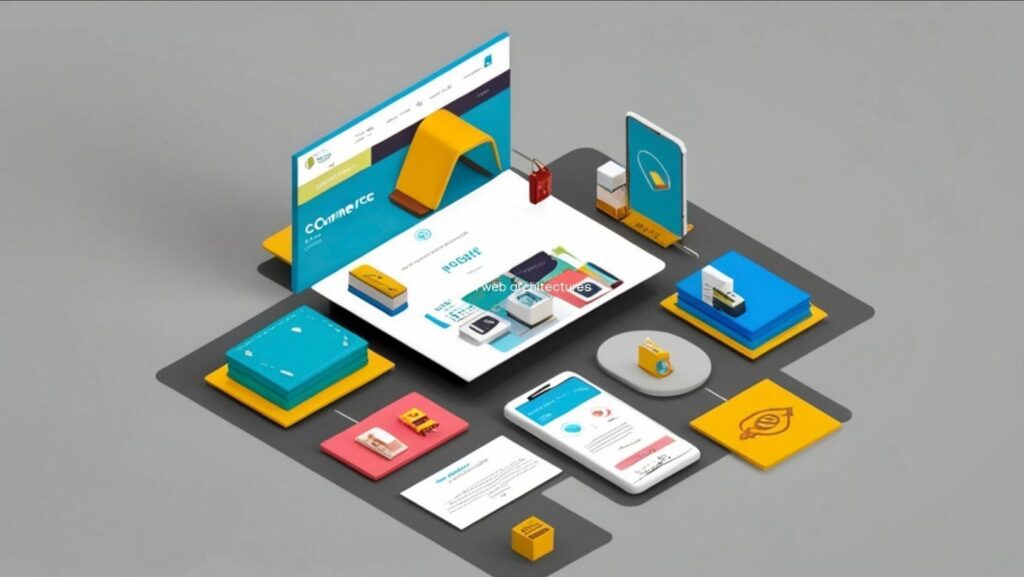
The path to our online presence is different than it’s ever been. Firstly, in its importance, as more customers now shop and gather information online, but also in terms of AI’s impact on traffic and SEO.
However, one thing hasn’t changed: we need websites and web apps, it’s just whether we build them through templates or custom-made. Templates have gotten better over the years – they’re cheaper and cheerful, but they can become a bottleneck down the line as the company grows.
The allure of the template
Templates are attractive because they are plug-and-play. In just a weekend, landing pages for MVPs can be created with a template, as well as other small-scale web projects. Some templates receive updates, others don’t. The provider matters.
A big issue is that they run out of answers as your project becomes more complex. It might be integrating a specific third-party API or building a closed community space, users of templates tend to hit a wall where the software can no longer keep up with the strategy.
Attempts to overcome these limits ends up in hacking the template code situations – it’s then a patchwork that leads to bloated sites and broken functionality whenever there is an update.
Sunk cost fallacy leads people to go further down this road, digging them deeper into a template-shaped hole, rather than starting again with custom development. Instead, an agile approach would be the custom one – it’s where the technology serves the business, rather than the business having to compromise its operations to fit the software. You avoid the migration trap where the costs of moving away exceed the initial savings of using a template.
Performance as a competitive advantage in modern SEO
Building a web app or site isn’t enough – search engine optimization is needed to bring in users. The likes of Google assess user experience (e.g., Core Web Vitals) and prioritise the ranking of sites that users appear to like. Templates are known for code bloat and slow page speeds – massive amounts of CSS and JavaScript tend to support features that most users won’t use. Slow page speeds can tank your rankings.
Modern custom architectures, like React, Next.js, or even headless CSM setups, help developers ship only what is necessary for each interaction. There is much more scope for faster speeds and less friction. Every 100ms of latency can drop conversion rates.
Security and the vulnerability of shared codebases
Security is a top priority, especially in times of rising cyber threats. Template-based platforms are frequent targets for cyberattacks because a single vulnerability in a widely used theme (or often it’s a plugin) can do widespread damage. Therefore, there is a lot of incentive to go after them for bad actors. When using a patchwork of third-party plugins to add functionality to a template, risk mounts and is often deceptive.
Custom-built solutions are more secure and you know exactly what’s under the hood. Custom architectures mitigate risk by disrupting the economic model by being less attractive to target, especially of automated attacks, as they prioritize scanning for known vulnerabilities in common templates.
Website development services
Choosing the right foundation means looking further down the line. High-quality website development services focus on creating future-proof solutions that utilize modern frameworks and agile methodologies. where CSM is commonly applied in team execution. The codebase remains maintainable and the technology stack can adapt and update to changing features, customer expectations, or trends in tech.
Custom development is what allows businesses to truly align their business goals with technical architecture – it prevents the friction that occurs when forcing a unique pre-made design. The codebase instead becomes a valuable intellectual property asset – it’s something that venture capitalists will explore in detail and reflect in a higher company valuation in the event of an acquisition. A template design shows a lower barrier to entry amid copycats.
Ownership, technical debt, and the true cost of maintenance
The upfront cost of templates is certainly lower, but the total cost of ownership (TCO) is a different story altogether. Templates need constant updates and tweaking, and because the business does not own the architecture, they are at the mercy of the template developer’s update cycle. If it becomes obsolete or no longer supported, a costly rebuild is needed.
Custom development is much better in terms of this risk mitigation. Full ownership means full control, and that gives you a much better idea of forecasted expenses down the line. Maintenance is strategic – it’s about optimizing and adding value rather than fixing issues caused by external updates. Long-term technical debt is often much higher with templates as they evolve into patchworks.
Choosing the foundation for future growth
Choosing between a template and custom development typically comes down to choosing between short-term convenience and long-term sustainability. This isn’t always the case for small businesses that remain small, with no scope for additional features down the line, but this would be a waste, especially when data is accumulated that can inform optimizations to better meet their expectations.