
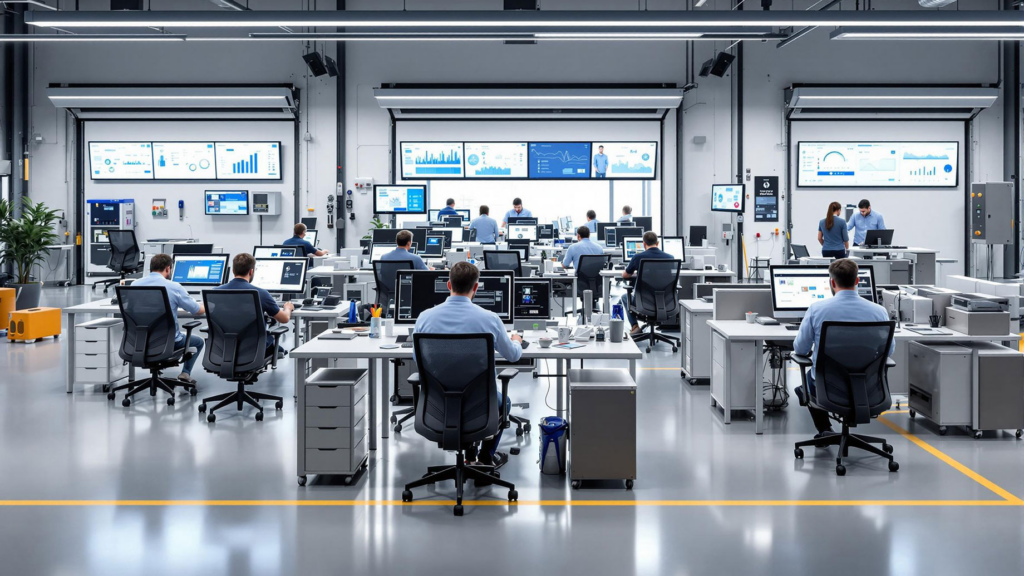
Most startup founders treat the office as an afterthought. They lock down the lease, drag in some desks and chairs, drop a coffee machine in the corner, and move on to things that feel more pressing. The logic is understandable — capital is tight, product timelines don’t wait, and a workspace that functions at a basic level seems sufficient for now. But “sufficient for now” has a way of quietly costing more than founders realize. Research consistently connects workspace design to measurable differences in output, absenteeism, and whether the right candidates choose you over the next company on their list. Founders who understand this early tend to grow differently than those who figure it out after watching good people leave.
The Physical Environment Is a Business Variable
The workspace shapes behavior in ways that often go unnoticed until they start showing up in other numbers. Poor acoustics nudge employees toward headphones and isolation, which slowly erodes organic collaboration. Inadequate lighting builds fatigue across shifts. Cluttered, inefficient layouts generate friction in daily workflows that nobody formally reports but everyone absorbs. These problems don’t announce themselves dramatically — they accumulate and eventually surface in productivity metrics, sick day patterns, and exit interviews.
Research from the World Green Building Council identified improved lighting conditions, interior layout, and air quality as among the strongest environmental drivers of office productivity. More recent data from the Gensler Global Workplace Survey found that employees who rate their workspace highly are significantly more likely to report high performance and strong engagement. The physical environment isn’t a soft factor. It’s an operational input, and treating it as anything less has real consequences that compound over time.
Layout Is a Performance Decision, Not an Aesthetic One
Where people sit, how traffic moves through a space, whether collaboration areas are separated from focus zones, and how the floor is organized relative to the work being done — all of these affect the quality and quantity of output. This holds true for a 12-person startup in a converted warehouse and for a 200-person company in a commercial office block. The mistake most growing businesses make is designing layout once, at move-in, and treating it as fixed from that point forward.
The Open Plan Isn’t Broken — It Just Needs Balance
Open floor plans became the default for startups partly for cost reasons and partly because openness read as a cultural statement: transparency, energy, accessibility. The reality of an unmanaged open office, however, is often a noisy, distraction-heavy environment where focused work suffers. Industry data consistently identifies noise as the leading cause of concentration disruption in open-plan offices, and the effects on deep, analytical work are significant.
The answer isn’t to abandon the open plan. It’s to balance it. Entrepreneurs who get this right carve out dedicated focus zones — quiet rooms, acoustic pods, or clearly zoned areas with defined behavioral norms — within otherwise open environments. They manage acoustic quality through material choices, furniture placement, and spatial zoning rather than through wholesale construction. The structure of the space should reflect the structure of the work happening inside it, and that requires more intentionality than most early-stage companies initially apply.
Production Floors and Workshop Environments Deserve the Same Scrutiny
For startups that operate manufacturing, fabrication, or workshop environments, layout decisions carry additional weight. Traffic patterns affect throughput. Equipment placement affects safety. The spatial relationship between storage areas, workbenches, and material staging zones determines how efficiently operators move through a production cycle — and how many small inefficiencies accumulate across a full shift.
Many early-stage manufacturing businesses design their floors reactively: placing equipment as it arrives and reorganizing when something is visibly wrong. A deliberate approach from the start — even a modest one developed with input from an industrial designer or an experienced operations consultant — tends to pay for itself quickly through reduced downtime, fewer workflow bottlenecks, and a lower risk of safety incidents. The cost of getting this right early is almost always lower than the cost of correcting it later.
Lighting Is Where Most Startups Leave Performance on the Table
Lighting is one of the most underestimated variables in workspace design and, critically, one of the most tractable. Most startups inherit whatever fixtures the previous tenant left behind and rarely revisit them. That typically means aging fluorescent tubes, inconsistent coverage, and color temperatures that nobody consciously chose for the kind of work happening in that space.
The impact of poor lighting is well documented. Insufficient light levels increase eye strain and accelerate fatigue. The wrong color temperature — too warm in spaces requiring sustained alertness, or too cool in areas meant for relaxed collaboration — affects mood and cognitive performance in ways that are measurable. Glare from poorly positioned fixtures creates a low-grade irritation that compounds over long shifts without anyone necessarily identifying it as the source of their exhaustion or lost focus.
In production and workshop environments especially, upgrading to recessed LED ceiling lights as the primary industrial lighting choice has shown measurable improvements in worker focus and reduced eye strain over long shifts. The combination of uniform light distribution, high color rendering index values, and significantly reduced heat output makes them a practical upgrade for almost any facility currently running older fluorescent or HID systems. Lower energy costs, fewer complaints from workers, and a measurable reduction in fatigue-related errors tend to justify the installation investment within a short timeframe.
In office environments, the principle is the same even if the specifics differ. Task-heavy work areas benefit from higher lux levels and cooler color temperatures. Break areas and informal collaboration zones respond better to warmer, lower-intensity light. Getting this right costs very little at the planning stage and delivers returns that accumulate across every person in the building, every shift they work.
Ergonomics as Infrastructure, Not a Perk
There’s a persistent tendency to treat ergonomic investment — quality chairs, adjustable desks, properly positioned monitors — as either a benefit or a culture gesture. It isn’t. It’s infrastructure that directly affects output and health outcomes for every person in the building, every day they show up to work.
Poor ergonomics contributes to musculoskeletal problems that drive absenteeism and reduced productivity well before they become formal injury claims. An employee working six hours in a poorly configured setup is operating below their capability regardless of talent or motivation. The physical discomfort is real and persistent, even when it isn’t dramatic enough to report or file a claim about.
Effective ergonomic programs in startup environments tend to share a few common characteristics:
● Adjustable seating and desk heights that genuinely accommodate different body types and working preferences
● Monitor positioning that eliminates neck and eye strain, typically with screens at eye level and at arm’s length from the user
● Standing desk access or movement-friendly layouts that allow employees to shift posture throughout the day
● A basic onboarding process so employees actually understand how to configure their own setup correctly from day one
That last point is consistently underestimated. Providing good equipment and leaving employees to figure out configuration on their own means a significant portion of the investment goes unrealized. A short setup walkthrough during onboarding pays for itself within the first month through fewer complaints, fewer adjustments, and better sustained focus.
What Candidates Are Actually Evaluating
The talent market for skilled roles — engineers, operators, designers, developers — is competitive enough that facility quality now functions as a genuine differentiator in hiring. Compensation matters. So does the nature of the work. But candidates are also evaluating the physical environment they will spend most of their waking hours in, and more of them are doing so deliberately than most founders expect.
Research by Cisco found that 73% of employees said their workplace became more attractive because of the physical and flexible environment their employer had created. This reflects a broader shift: people are no longer just accepting jobs — they’re evaluating the full context of where and how they’ll work. The workspace is part of that evaluation whether founders actively manage it or not, and the default answer to “what’s your office like?” carries real weight during the hiring process.
This doesn’t mean every startup needs a premium fitout with exposed concrete, statement furniture, and bespoke lighting. What candidates consistently respond to is evidence of thoughtfulness. A well-lit, organized, comfortable space communicates that the company has genuinely considered the experience of the people working there. A cramped, poorly maintained, or shoddily equipped environment communicates the opposite — that employees are not an operational priority. In a tight hiring market, that signal carries more weight than many founders who haven’t tested it would assume.
Making the Investment Case Internally
The challenge for most entrepreneurs is sequencing and prioritization. Early-stage companies are making a thousand decisions simultaneously, and facility improvements rarely carry the same urgency as a product deadline or a customer escalation. The result is that physical environments get improved reactively — in response to visible problems or repeated complaints — rather than proactively as part of a deliberate operational plan.
The better framing is to treat facility design as part of the same infrastructure investment conversation as technology platforms, HR systems, and supply chain setup. It doesn’t require a large upfront capital commitment. Phased improvements — starting with lighting upgrades, moving to ergonomic equipment, then addressing layout and acoustic challenges — deliver real results even when budgets are tight. Each phase builds on the last and contributes to a compounding return across the whole working environment.
Founders who take this approach typically see the returns in predictable places: fewer environment-related complaints in team retrospectives, stronger retention numbers at the 12- and 18-month marks, and a noticeably stronger response from candidates during interview processes. The workspace doesn’t replace good culture, fair compensation, or strong leadership. But it either actively supports or steadily chips away at everything else the company is working to build — and that reality doesn’t change just because it’s easy to ignore early on.