

Time-tracking software such as Controlio have emerged as a great way for people to reclaim control of their time and manage it more effectively. But for that to happen, they need to use a time-tracking app in the right way, and take advantage of its ability to provide data insights that can reveal inefficiencies, wasted time, low-value busywork, and excessive distractions.
To leverage time-tracking and turn it into an ally that will improve focus, work-life balance, and productivity – here’s 5 important tips that must be followed.
Categorize Time Meaningfully
Don’t make the mistake of treating time-tracking like a digital punch clock and only recording the time you start or stop working. Most time-tracking software such as Controlio, Hubstaff, or Clockify will either let you categorize time entries manually, or will categorize it automatically by app or website and subsequently let you customize the labels further.
Aim to make the categories you use descriptive and relevant. For example, instead of using a vague label like ‘marketing’, be more specific and use labels such as ‘marketing campaign – planning’, ‘marketing campaign – content creation’, and so on.
Use Real-Time Time-Tracking
Tracking time via manual time entries after the fact is grossly inaccurate – sometimes by as much as 40%. Fortunately, modern time-tracking tools offer one-click timers such as in Clockify, or automated tracking such as in Controlio. Either of these options is acceptable, and by using them you’ll improve the accuracy of time-tracking by leaps and bounds.
Review Data on a Weekly Basis
To truly take advantage of time-tracking, regular reviews are mandatory. Foster a habit of reviewing time-tracking data on a weekly basis and ensure there is ample time to go over the employee productivity and work hours analytics.
During the weekly reviews, analyze exactly how much time is being wasted on non-productive activities, what clients or projects consume the most amount of time, and what activities deliver the highest returns based on the hours invested into them. Also check if there are any repetitive activities that consume a lot of time but can be delegated, automated, or eliminated entirely.
Leverage Automation Features
Many time tracking software offer certain automation features such as customizable alerts, idle detection, and automated categorization. Some may even have more advanced AI automation features.
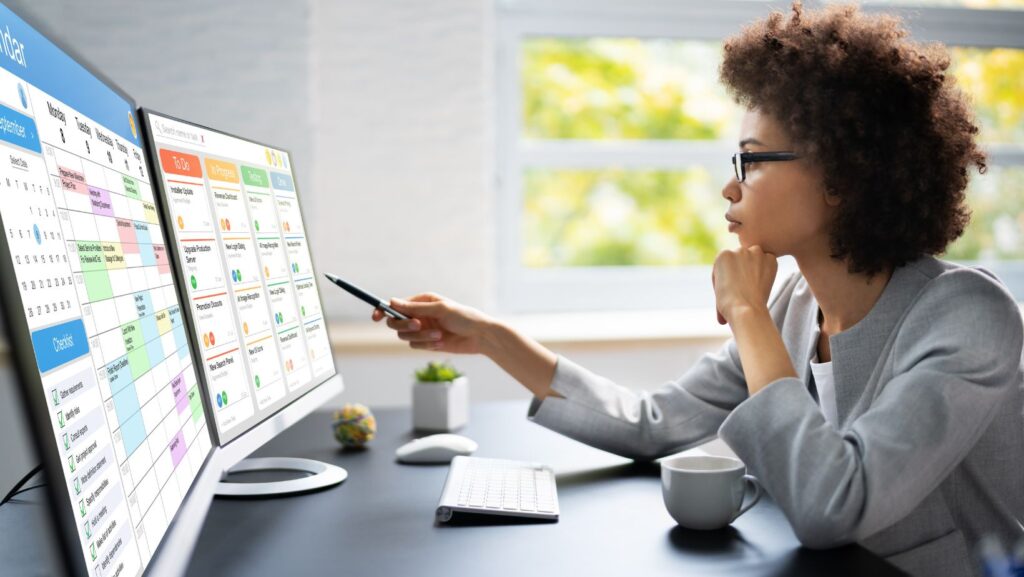
When used wisely, these features can prevent time from being wasted. For example, setting an alert that sends a reminder after working for 90 minutes straight can promote a habit of taking regular breaks and lead to higher productivity levels in the long term. Overall, automated reminders can act as a helpful assistant that gently fosters better time management habits.
Start Data-Driven Time-Blocking
After tracking how time is spent for three to four weeks, it will be possible to estimate realistic averages on how much time is invested in different types of activities. Based on that data, that exact amount of time can be ‘blocked out’ for high priority work in advance, so that the following week all other work that is less of a priority can be arranged around it.
Essentially this move will ‘protect’ the time necessary for high-priority work that has higher returns. It will also force people to fit everything else in the space that remains, and prevent them from taking on excessive amounts of work while believing they have the time for it.
Conclusion
To put it simply, time-tracking works best when it is used as a diagnostic instrument rather than a surveillance tool. Its ability to capture accurate data on how time is spent and provide insights into activity patterns allow users to discover missing hours and reclaim them each and every week.
Instead of being too ambitious, it is best to start small. Check out time-tracking software such as Controlio, see what it can do, and use it to begin to record data in real-time, categorize it meaningfully and review it on a weekly basis. After that you can plan and use automation features and time-blocking to improve time-management further.