
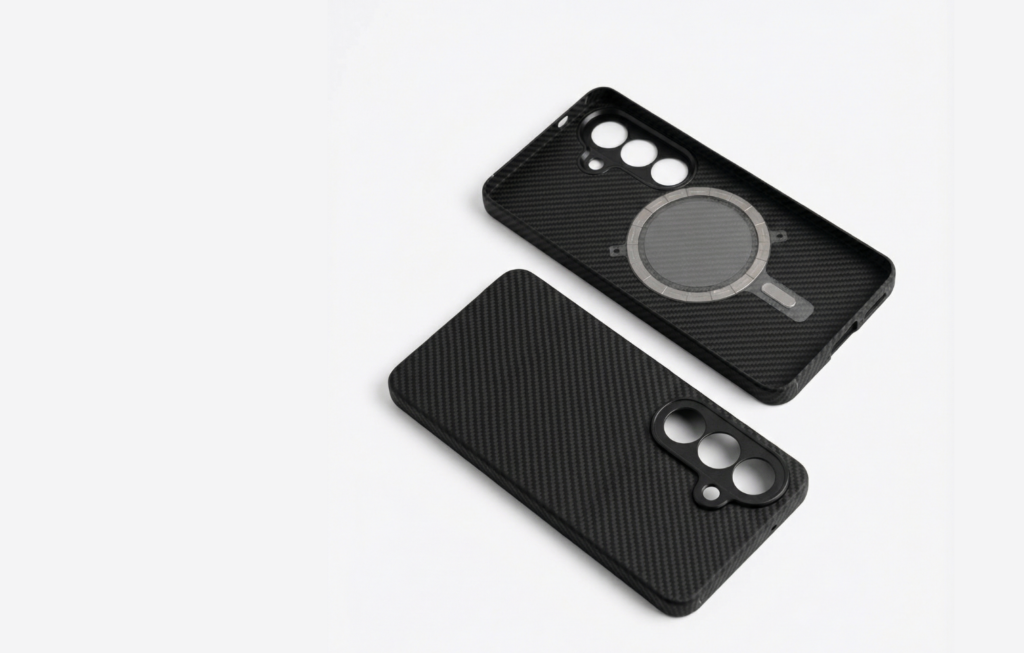
Shopping for a Galaxy S26 Ultra case can quickly turn into a material comparison. Among the many common options, aramid fiber is less well-known than TPU and silicone cases, typically being in the premium segment.
A slim Galaxy S26 Ultra case that preserves the phone’s original feel and keeps it pristine needs a material that holds up in different areas. The ‘600D’ aramid fiber is the closest to having that modern protection.
Known for its use in aerospace, motorsports, and protective equipment, aramid fiber also performs surprisingly well in the smartphone world. It combines strength and durability in as little bulk as possible. The “600D” label refers to the fiber’s denier rating, which relates to the thickness and weight of the strands used in the weave. This small detail plays an important role in how a case feels, performs, and ages over time.
Understanding this material’s key features, benefits, and variations can make your buying decision much easier.
What Are the Key Features of a 600D Aramid Fiber Galaxy S26 Ultra Case?
A 600D aramid fiber case is often chosen by users who want protection without changing the character of their phone. Instead of making the device feel bulky or rubbery, this material keeps things slim, rigid, and refined.
Beyond aesthetics, there are several practical advantages that make 600D aramid fiber particularly appealing for a large device like the Galaxy S26 Ultra. We break them down below.
Material Strength
One of the biggest reasons manufacturers use aramid fiber is its superior tensile strength. It has a 5–10 times higher strength-to-weight ratio than steel, ideal for lightweight, high-impact applications.
Despite being incredibly thin, the material is highly resistant to stretching, bending, and general wear. A 600D weave strikes a balance that works well for phone cases: strong enough to add structural integrity, yet fine enough to maintain a sleek appearance.
For everyday use, this means:
- Reliable scratch resistance
- Improved durability
- Reduced loosening or warping over time
While no thin case can make a phone indestructible, aramid fiber provides a rigid shell that helps shield against minor impacts, pressure inside bags, and the gradual damage caused by daily handling.
Another important factor is longevity. Many plastic-based cases degrade with exposure to heat, UV light, and oils from your hands. Aramid fiber is inherently more stable, meaning it is less likely to discolor, soften, or develop a sticky surface. This makes it attractive for users who prefer a case that still looks premium after months of use.
Ultra-Thin Profile
Bulk is one of the most common complaints about phone cases, especially for larger flagship devices. The Galaxy S26 Ultra is already substantial in size, so adding thickness can significantly affect comfort and usability. A 600D aramid fiber case is designed to address exactly this issue.
Because aramid fiber is naturally strong, manufacturers can use very thin layers while still preserving rigidity. This results in cases that often measure just fractions of a millimeter thick. In practical terms, the phone retains its slim silhouette, fits easily into pockets, and remains comfortable for one-handed use.
The thin profile also benefits gesture navigation and edge interactions. Users do not have to contend with raised, bulky borders that interfere with swipes or create awkward transitions between screen and frame. The case complements the device rather than dominating its physical feel.
Thin cases are frequently associated with compromised protection, but that is not always the case. The structural strength of aramid fiber allows designers to minimize material without sacrificing basic durability. Thinness and stability are among the defining characteristics that draw people to try 600D aramid fiber.
Superior Texture
Texture is an underrated aspect of case design. It directly affects grip, comfort, and overall user satisfaction. A well-made 600D aramid fiber case offers a distinct tactile experience that differs from silicone, TPU, or glossy plastics.
The fine weave pattern of 600D fibers creates a smooth yet subtly textured surface. Instead of feeling rubbery or sticky, the case feels dry, clean, and controlled in the hand. Many users describe it as a “soft matte” sensation, even though the material itself is rigid.
With this superior texture:
- You’ll have a better grip without relying on aggressive coatings.
- Phones are less likely to slip, yet the case slides easily into pockets or bags.
- Avoid the common problem of lint attraction seen in some soft-touch finishes.
- Over time, the surface also tends to resist the shiny patches that develop on plastic or silicone cases.
Beyond practicality, texture influences perceived quality. Aramid fiber’s woven appearance often signals precision and attention to detail.
Signal Friendly
Some phone case materials can interfere with signal strength, leading to weaker reception, slower data speeds, or inconsistent connectivity. Aramid fiber offers a clear advantage in this area.
Unlike metal cases, which can disrupt antennas, aramid fiber is non-conductive and does not block radio frequencies. This makes it inherently compatible with cellular signals, Wi-Fi, Bluetooth, and GPS. Users typically experience little to no degradation in wireless performance.
For a device designed around constant connectivity, this characteristic matters. A case should protect the phone without compromising its core functions. Aramid fiber’s signal-friendly nature ensures that slim protection does not come at the expense of everyday usability.
This benefit becomes especially relevant for users who rely heavily on mobile data, hotspot usage, or navigation apps. Maintaining stable signal performance is often more important than marginal differences in drop protection.
MagSafe-Compatibility
Magnetic accessory ecosystems are no longer limited to a single brand. Many Galaxy S26 Ultra cases now advertise MagSafe compatibility or magnetic alignment features. When integrated properly, aramid fiber works well with this design approach.
A MagSafe-compatible aramid fiber case typically includes embedded magnets arranged in a precise ring. These magnets allow the phone to align with chargers, mounts, and accessories designed for magnetic attachment. The rigid nature of aramid fiber helps maintain magnet positioning, which contributes to consistent performance.
For users, this opens up practical conveniences. Magnetic chargers snap into place, mounts hold securely, and accessories attach without mechanical clips. The case remains thin while supporting these features, avoiding the bulky layers often required in traditional designs.
Magnetic functionality also intersects with ergonomics. Wallets, stands, and grips can be added or removed as needed. This flexibility is appealing to users who prefer a modular setup rather than a permanently attached accessory.
600D vs. 1500D Aramid Fiber
When exploring aramid fiber cases, another common comparison emerges: 600D vs. 1500D. Both refer to denier ratings, but they result in noticeably different characteristics.
600D aramid fiber uses finer strands, creating a tighter and more subtle weave pattern. The surface appears smoother and more uniform, often associated with minimalist, refined designs. Cases made from 600D material tend to emphasize slimness and a sleek aesthetic.
1500D aramid fiber, by contrast, uses thicker strands. The weave is more pronounced, giving the case a bolder, more rugged visual texture. While still strong, the material may feel slightly thicker and more structured. Some users prefer this look because it highlights the woven pattern more clearly.
Neither option is universally “better.” The choice largely depends on personal preference.
Users seeking the thinnest possible profile and understated appearance often lean toward 600D. Those who value a more visible texture and slightly heavier feel may gravitate toward 1500D.
Performance differences in real-world phone usage are typically modest. Both materials offer excellent durability relative to conventional plastics. The decision is often guided more by aesthetics, hand feel, and design philosophy rather than dramatic strength variations.
Choosing the Galaxy S26 Ultra Case for Your Needs
Selecting the right Galaxy S26 Ultra case involves more than just materials. Lifestyle, habits, and priorities all play a role. A case that feels perfect for one user may feel completely wrong for another.
For users who prioritize minimalism, pocket comfort, and preserving the phone’s original design, a 600D aramid fiber case often makes sense. It adds protection while keeping the device slim and visually clean. The tactile experience and rigidity align well with those who dislike soft, bulky cases.
Other users may value heavier impact protection, thicker corners, or rugged styling. In such scenarios, different materials or hybrid constructions might be more suitable. The key is aligning the case with realistic usage patterns rather than abstract specifications.
A thoughtful case choice enhances daily interaction with the phone. It influences comfort, convenience, and long-term satisfaction.