
Keeping track of vulnerabilities isn’t the hard part anymore. The real challenge is knowing which ones actually need your attention.
Modern vulnerability management platforms help security and development teams find security issues, prioritize the ones that matter most, and fix them before they become bigger problems. Many also bring together code, cloud, containers, and runtime security in one place, so you don’t have to manage multiple tools.
To help you find the right platform, we’ve compared three of the best vulnerability management solutions for enterprise teams: Aikido Security, Wiz, and Snyk.
What Should You Look For?
Not every platform works the same way. So, here are a few things worth considering before making a decision.
- Coverage – Does it protect your code, cloud, containers, and runtime?
- Prioritization – Can it help you focus on the vulnerabilities that actually matter?
- Automation – Does it make fixing issues faster?
- Developer experience – Is it easy for developers to use?
- Integrations – Does it work with the tools your team already uses?
Quick Comparison
|
Platform |
Coverage |
Prioritization |
Automation |
Best For |
|
Aikido Security |
Excellent |
Excellent |
Excellent |
Teams looking for one platform to secure code, cloud, containers, and runtime |
|
Wiz |
Excellent |
Very Good |
Very Good |
Cloud-first organizations |
|
Snyk |
Very Good |
Very Good |
Very Good |
Developer-first application security |
Aikido Security
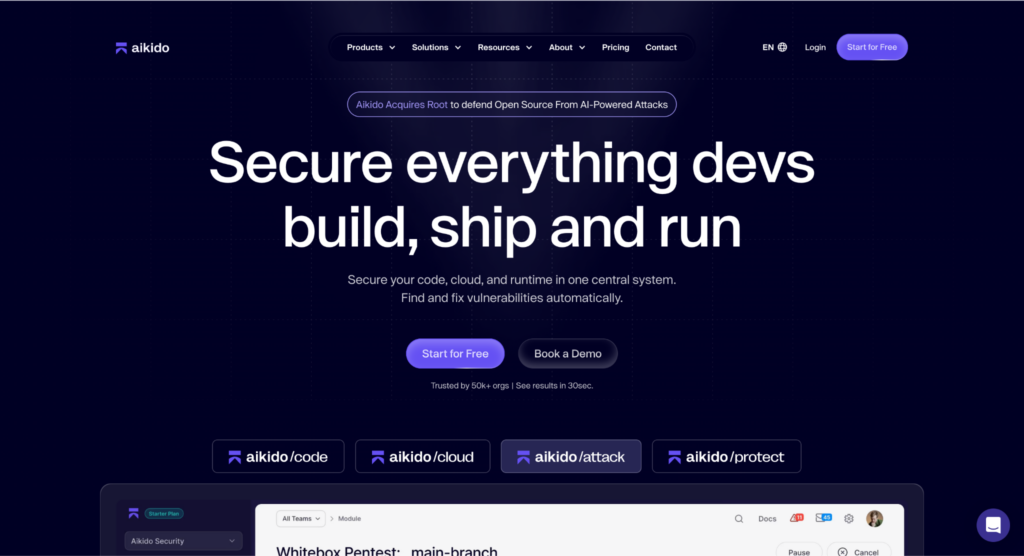
If you’re looking for one platform that covers almost everything, Aikido Security is a great place to start. It brings together code, cloud, containers, runtime, and API security into one platform, making it much easier to manage vulnerabilities across your environment.
What we like most is that Aikido doesn’t just show you a huge list of security issues. It helps you figure out which ones actually matter by automatically filtering out noise and prioritizing the most important vulnerabilities. That means your team can spend less time sorting through alerts and more time fixing real problems.
Why We Like It
- All-in-one coverage
Scan your code, open-source dependencies, cloud infrastructure, containers, virtual machines, APIs, and more from a single platform.
- Smarter alerts
Features like auto-triage, deduplication, and reachability analysis help reduce alert fatigue so your team can focus on what’s important.
- Automatic fixes
Aikido can generate pull requests to help fix issues in your code, dependencies, containers, and infrastructure.
- Works with your existing tools
Integrates with GitHub, GitLab, Jira, Azure DevOps, VS Code, Microsoft Teams, and many other developer tools.
- Quick to get started
You can connect your repositories and start scanning in just a few minutes without changing the way your team works.
Pros
- Covers code, cloud, containers, APIs, and runtime
- Helps reduce alert fatigue
- AutoFix speeds up remediation
- Easy to set up
- Great integrations for development teams
Cons
- Can include more features than smaller teams need
Wiz
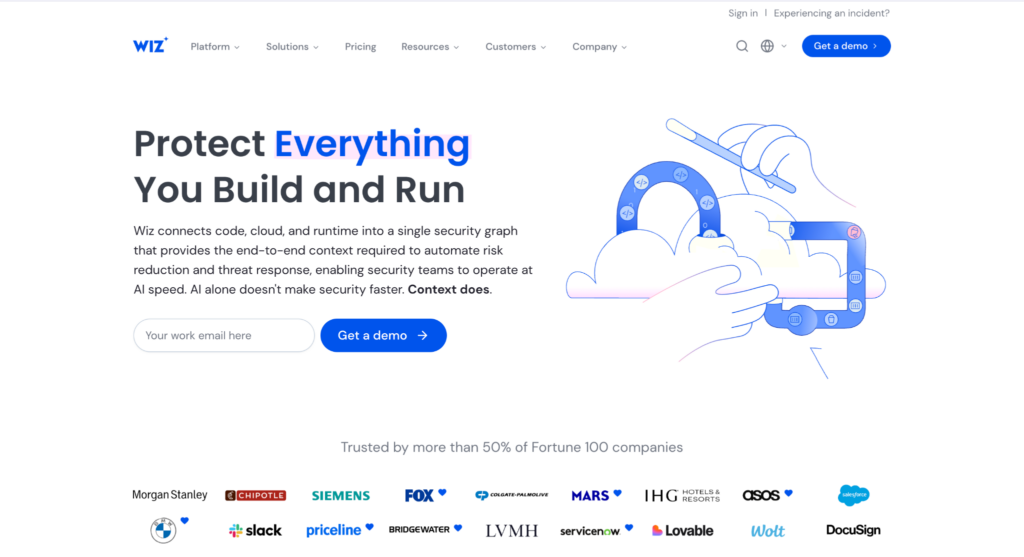
If most of your infrastructure runs in the cloud, Wiz is one of the strongest platforms available. It’s designed to give security teams a complete view of their cloud environment, helping them spot vulnerabilities, misconfigurations, and other risks before they become bigger problems.
Why We Like It
- Great cloud visibility
See risks across AWS, Azure, Google Cloud, Kubernetes, virtual machines, containers, and more.
- Prioritizes real risks
Wiz connects vulnerabilities, cloud misconfigurations, identities, and exposed assets to help security teams focus on the issues that matter most.
- Agentless scanning
Many cloud resources can be scanned without installing agents, making deployment faster and easier.
- Supports compliance
Includes tools to help organizations monitor compliance with common security frameworks.
- Works with existing tools
Integrates with popular cloud providers, ticketing systems, and DevSecOps workflows.
Pros
- Excellent visibility across cloud environments
- Strong risk prioritization
- Agentless deployment
- Great for large enterprise environments
Cons
- Mainly focused on cloud security
- Can be more than smaller organizations need
Snyk
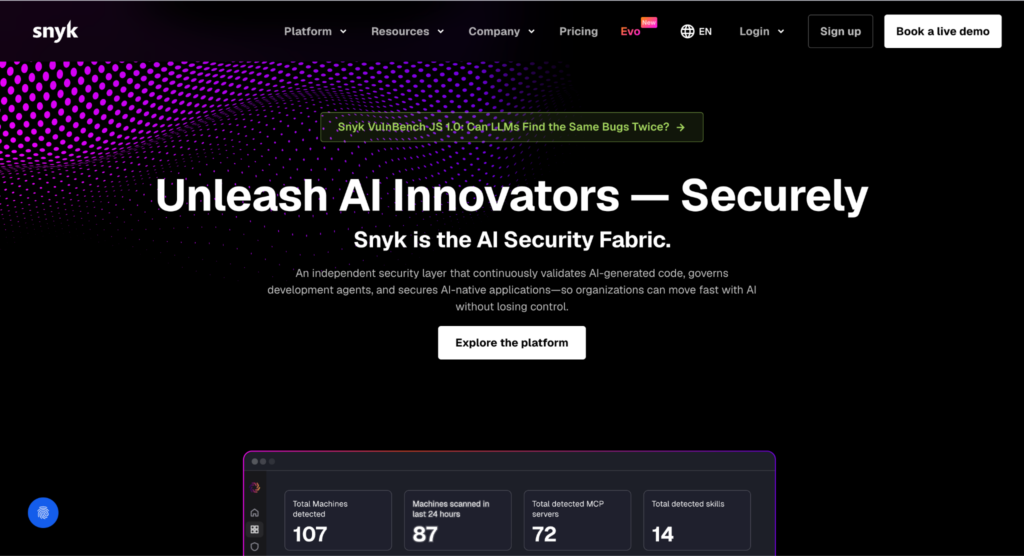
Snyk is one of the best-known names in developer security. It’s built to help developers find and fix vulnerabilities while they’re writing code, instead of waiting until later in the development process.
Over the years, Snyk has expanded beyond dependency scanning and now supports code security, container security, infrastructure as code (IaC), and cloud security.
Why We Like It
- Developer-first approach
Security checks fit naturally into IDEs, repositories, and CI/CD pipelines.
- Wide security coverage
Scan code, open-source dependencies, containers, and infrastructure as code.
- Helpful remediation advice
Explains vulnerabilities and provides guidance to help developers fix them.
- Strong integrations
Works with GitHub, GitLab, Bitbucket, Azure DevOps, Jira, IDEs, and many other developer tools.
- Popular with engineering teams
Used by organizations that want developers to take an active role in application security.
Pros
- Easy for developers to adopt
- Strong code and dependency scanning
- Wide range of integrations
- Fits well into CI/CD workflows
Cons
- Large numbers of findings may require additional triage
- Organizations with broad cloud security needs may need additional security tools
Final Thoughts
All three platforms are solid choices, but the best one depends on what your team needs.
If you’re looking for an all-in-one solution that helps you find, prioritize, and fix vulnerabilities across your code, cloud, containers, and runtime, Aikido Security is a great place to start.
If your main focus is cloud security, Wiz is a strong option. And if you want to build security directly into your development process, Snyk is well worth considering.
The right vulnerability management solution can truly help your team spend less time chasing alerts and more time improving security.