
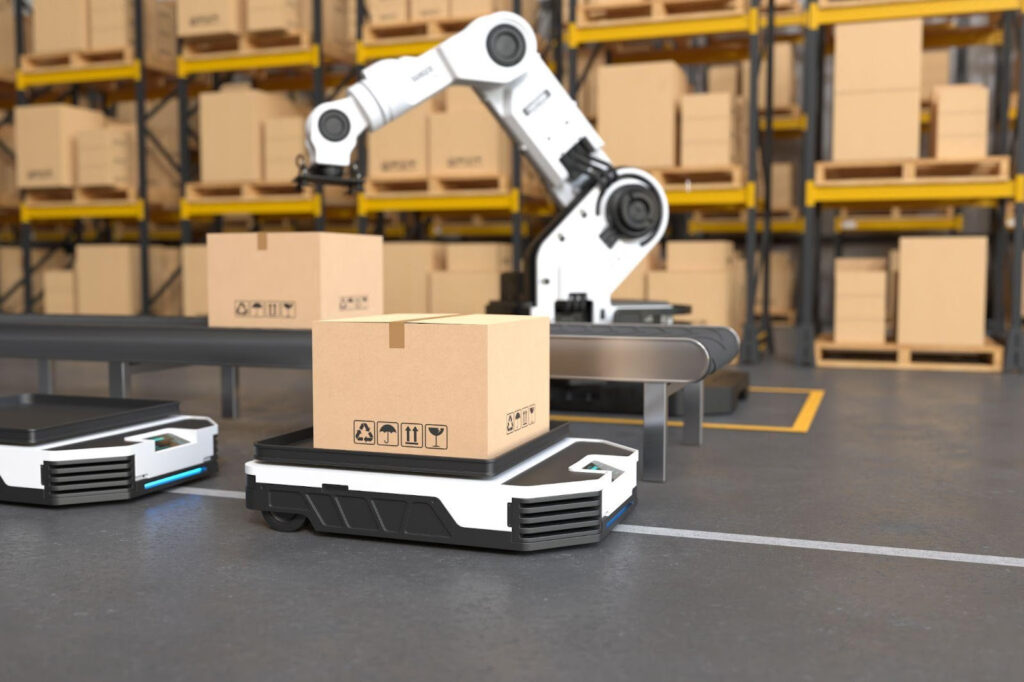
Inventory accuracy has long been the quiet driver of operational excellence—an invisible force that separates scalable enterprises from those constantly firefighting fulfillment gaps. Even in industries with advanced automation, many organizations still treat inventory as a static ledger rather than a living data ecosystem. As logistics networks grow in complexity, the ability to synchronize real-time inventory data with predictive analytics becomes a make-or-break factor for competitiveness.
The future of supply chain performance lies at the intersection of data integrity, automation, and AI-driven decision-making. Forward-thinking companies are already leveraging Automation in Logistics and Warehousing to bridge the gap between physical operations and digital intelligence. The result is not just improved tracking but a smarter, self-correcting ecosystem that anticipates disruption before it happens.
What most industry discussions overlook is that inventory accuracy is less about counting better—and more about learning faster. AI-enabled systems don’t just detect discrepancies; they understand their causes, predict recurrence patterns, and adapt business logic to prevent them. For software development professionals, this signals a shift: inventory management software must evolve from transactional record-keeping to cognitive infrastructure, where AI models continuously refine how inventory data behaves across the enterprise.
The Real Cost of Inaccurate Inventory Data
Every 1% deviation in inventory accuracy can silently erode margins through misallocation, emergency procurement, and lost sales. The World Economic Forum estimates that global businesses lose over $1.8 trillion annually due to supply chain inefficiencies rooted in poor data quality. Yet most organizations underestimate the ripple effects of this problem because the financial impact is distributed across functions—procurement, warehousing, and customer service—making it less visible on a single balance sheet.
A. Overstocking and Capital Inefficiency
Overstocking is more than an accounting inconvenience—it’s a strategic bottleneck. When excess inventory accumulates, it immobilizes capital that could otherwise fund innovation or expansion. Moreover, holding costs (insurance, depreciation, obsolescence) compound over time. AI models can detect these inefficiencies early by analyzing product velocity, seasonal variability, and replenishment frequency, providing data-backed recommendations for leaner stock levels.
B. Stockouts and Missed Revenue Opportunities
Conversely, understocking triggers customer dissatisfaction and disrupts downstream processes. AI mitigates this by unifying fragmented demand signals—from POS data to social sentiment—and transforming them into real-time reorder insights. This enables enterprises to strike the delicate balance between cost containment and service reliability.
For developers, the challenge lies in building systems that treat inventory data as dynamic intelligence, capable of adjusting itself based on historical feedback loops rather than fixed rules. This principle is at the heart of AI-led supply chain transformation, supported by thought leaders such as Gartner’s Supply Chain Top 25 reports.
Why Traditional Systems Fall Short
Traditional inventory management platforms were built for an era when data changed slowly and supply chains were linear. Their static rules and periodic updates cannot accommodate today’s volatile demand patterns, multi-channel fulfillment, and global disruptions.
A. Lack of Real-Time Visibility
Legacy ERP and WMS platforms often rely on batch updates and manual reconciliation, creating blind spots in the inventory lifecycle. Data latency means that what appears “accurate” on screen may already be obsolete in the warehouse.
B. Forecasting Fatigue: The Limits of Rules-Based Models
Conventional forecasting depends on deterministic logic—if-then rules that assume stability. But in practice, seasonality, marketing events, and macroeconomic shifts make this approach obsolete. Rule-based models lack the agility to reinterpret new variables on the fly.
To bridge this gap, enterprises need adaptive algorithms that evolve in sync with operational data. Software developers have the critical role of enabling these systems through modular architectures—where forecasting engines, anomaly detection, and replenishment logic can self-adjust as the environment changes.
How AI Transforms Inventory Management from Reactive to Predictive

AI shifts inventory management from manual correction to autonomous optimization. Rather than reacting to discrepancies, organizations can now anticipate them through predictive intelligence.
A. Demand Forecasting Powered by Machine Learning
Machine learning models digest multi-source data—past sales, marketing activity, and macroeconomic indicators—to predict demand more accurately than traditional methods. Over time, they improve by continuously learning from error variance, helping reduce overstock and understock events simultaneously.
B. Computer Vision for Real-Time Inventory Tracking
Computer vision systems equipped with AI enable instant identification and classification of stock in warehouses. This not only eliminates human error but also builds a continuous digital twin of inventory flow.
C. Intelligent Reordering and Dynamic Safety Stocks
AI can dynamically set reorder points based on real-time consumption and supplier reliability, replacing static safety margins with continuously optimized ones.
Table: Traditional vs. AI-Driven Inventory Approaches
| Aspect | Traditional Systems | AI-Driven Systems |
| Forecasting | Based on historical averages | Learns from multivariate, real-time data |
| Reordering | Static thresholds | Dynamic, event-triggered |
| Visibility | Batch updates | Continuous, sensor-integrated |
| Adaptability | Manual rule changes | Self-adjusting algorithms |
| Accuracy Trend | Degrades over time | Improves with data volume |
This dynamic ecosystem doesn’t just store data—it interprets and reacts to it, enabling proactive correction before imbalances escalate.
Reducing Holding Costs Through AI-Driven Optimization
Holding costs have traditionally been viewed as unavoidable overhead. AI challenges this assumption by finding systemic inefficiencies invisible to human analysts.
A. Smart Space Utilization
By analyzing SKU velocity and turnover, AI suggests optimal warehouse layouts—positioning high-velocity items closer to dispatch points. This not only minimizes picking time but also reduces labor costs.
B. Just-in-Time (JIT) and Vendor Collaboration
AI optimizes procurement schedules by synchronizing supplier deliveries with predictive consumption. The result: minimized safety stock without risking service levels. Cloud-based AI models also facilitate data transparency across supplier networks, reducing friction and contractual penalties.
One underdiscussed benefit is AI’s impact on sustainability: by maintaining optimal stock levels, companies reduce energy use for storage and decrease waste from obsolete goods—a factor now critical for ESG reporting and compliance.
Building the Software Foundation for AI-Driven Inventory Intelligence
Developing AI-driven inventory systems requires more than integrating a few algorithms—it demands a re-architected data foundation.
A. Integrating IoT, WMS, and ERP Data Streams
Real-time insights depend on unified, interoperable data streams. IoT sensors in warehouses feed environmental and positional data, while APIs connect ERP and WMS systems to form a single source of truth.
B. Cloud-Native and API-First Architecture
Scalable, cloud-based environments allow continuous learning models to update without disrupting operations. API-first design ensures smooth integration with external analytics and supplier systems.
C. The Role of Custom AI Solutions
Off-the-shelf AI can offer short-term wins, but custom-built solutions reflect an organization’s unique logistics DNA—its SKU mix, supplier behavior, and storage logic. Developers who build adaptive middleware and intelligent connectors enable systems to evolve organically with business growth.
For implementation patterns and data best practices, McKinsey’s AI in Supply Chain 2024 report provides a useful framework for developers designing resilient inventory systems.
From Pilot to Scalable AI Deployment
The most overlooked phase in AI adoption is scaling. Many enterprises successfully pilot AI inventory tools but fail to integrate them enterprise-wide due to governance and interoperability issues.
A. Start Small, Scale Fast
Begin with a high-impact, low-risk use case—such as automating cycle counts or predictive replenishment—and measure outcomes rigorously. Once validated, replicate the architecture across geographies and product lines.
B. Change Management and Cross-Functional Collaboration
True scalability requires cultural and procedural shifts. Software teams must align with operations and finance to ensure that AI recommendations translate into actionable workflows. Human trust remains essential—AI adoption succeeds when users view it as a decision partner, not a black box.
Building modular microservices and federated learning models enables localized optimization while keeping enterprise-level oversight intact.
Measuring ROI: What Success Looks Like
Quantifying AI’s impact requires both operational and financial perspectives. Many organizations make the mistake of measuring success only by cost reduction, ignoring strategic gains like resilience and agility.
A. KPIs to Track Inventory Accuracy and Cost Reduction
Key performance metrics include:
- Forecast accuracy improvement (% reduction in variance)
- Inventory turnover ratio increase
- Reduction in holding cost per SKU
- Decrease in manual cycle count frequency
B. Translating Data Improvements into Financial Outcomes
When integrated correctly, AI initiatives can deliver 10–20% lower carrying costs and up to 35% faster inventory reconciliation cycles. More importantly, they establish a learning infrastructure that compounds in value as more data flows through it—turning short-term efficiency into long-term strategic advantage.
Future Outlook: Autonomous Inventory Ecosystems
The next frontier is autonomy—inventory systems that think, act, and improve without direct human intervention. These ecosystems will combine AI, robotics, and IoT, where machines not only identify discrepancies but physically correct them in real time.
Such environments are built on continuous feedback loops: robots restock shelves based on AI signals, drones verify shelf accuracy, and predictive algorithms coordinate procurement in real time.
For developers, this evolution demands architectural foresight—designing systems capable of learning beyond their initial parameters. As AI matures, its value won’t come from isolated efficiency gains but from creating self-optimizing supply networks that perpetually refine themselves through experience.