
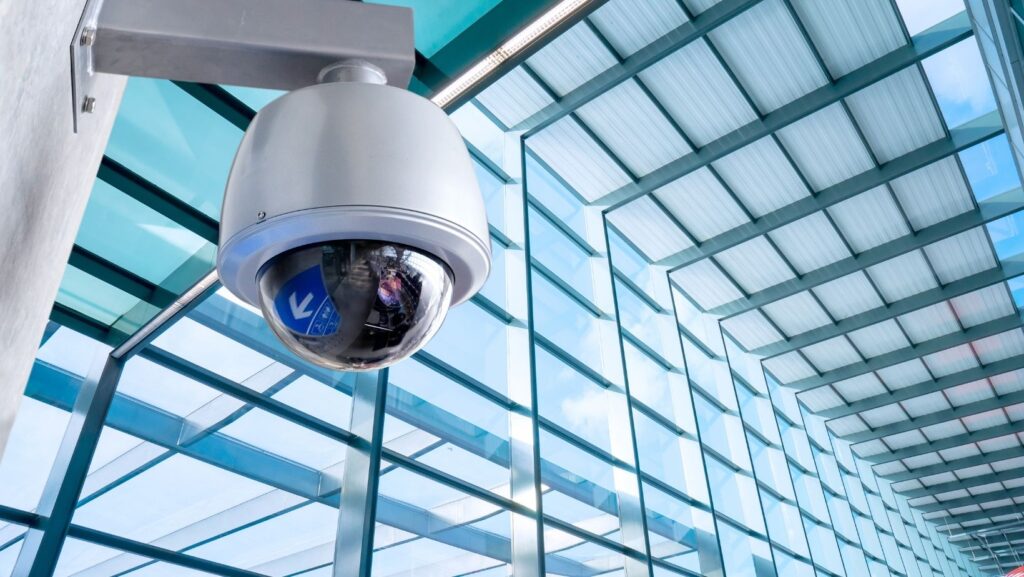
Most organisations with a physical security programme have a perimeter. Fences, walls, gates, cameras are all visible markers of where controlled space begins. What many of those organisations lack is an active perimeter.
A perimeter that exists is a boundary, whereas a perimeter that works is a detection-and-response system. The gap between those two things is where many security failures originate.
We examine the most common weaknesses in perimeter security systems and why a unified approach is the only reliable way to close them.
The threats most perimeter security plans miss
There is no cutting through a fence in plain view of an operator. Hence, perimeter failures are rare in obvious places. Perimeters tend to fail in ways that are quieter and far more exploitable.
Blind spots created by scale
Large or irregular perimeters are inherently difficult to supervise. An energy substation, a logistics hub or an airport with irregular boundaries is difficult for security officers to monitor. Remote or unmanned boundary areas, in particular, create gaps that a determined intruder can identify and exploit with minimal effort.
Multiple access points
Sites with high operational complexity such as industrial facilities or large commercial estates tend to have numerous vehicle and personnel access points. Each one is a potential vulnerability. Access points that are not actively monitored or that rely on manual checks without integration into a broader security system represent exactly the kind of low-resistance entry that opportunistic and targeted intrusions exploit.
High-value assets close to site edges
For many industries, the highest-value assets are located near the perimeter rather than deep inside a facility. This is often a function of operational necessity, but it means that a breach of the outer boundary can result in immediate access to critical infrastructure.
Perimeter Security Solutions
Barrier detection
Intelligent sensors mounted directly on fences or walls detect contact and climbing attempts at the barrier, alerting personnel as a breach occurs rather than once intruders are on-site.
Infrared and virtual barriers for open areas
Where physical barriers are impractical, infrared and virtual barrier systems detect movement across open ground. This creates a detection layer ahead of the physical perimeter, extending early warning farther from critical assets.
Active detection for wide-area coverage
For large or irregularly shaped sites where conventional sensors cannot provide continuous coverage, active detection systems provide long-range linear detection across exposed perimeters. This is particularly relevant for energy infrastructure or sites with extended boundary lines.
Integrated video for verification
Video surveillance integrated with perimeter detection changes the function of cameras from passive recording to active verification. When a detection event occurs, the relevant camera feed is surfaced automatically, allowing an operator to assess the situation in seconds rather than minutes. This directly addresses the false alarm problem: with visual confirmation available immediately, operators can make confident decisions rather than defaulting to caution or dismissal.
Correlated alarm management
A unified platform correlates perimeter alerts with access control events, video data, and intrusion signals within a single interface. Rather than an operator managing multiple screens and systems simultaneously, correlated alarm management surfaces the relevant information in context, reducing response time and improving decision quality under pressure.
The sectors where perimeter security matters most
- Transportation and logistics: These sites have large perimeters and multiple access points, which demand wide-area detection and active access management.
- Energy and utilities: Remote locations, such as energy sites, have slow security response times. The typical consequences of a breach at a substation or generation facility are power disruption, equipment damage, regulatory exposure, and potential safety incidents.
- Industrial sites and remote facilities: Irregular perimeter shapes and unmanned boundary sections create compounding vulnerabilities.
- Warehouses and large commercial estates: Extended operating hours and high-turnover access populations create sustained perimeter pressure that passive measures cannot absorb.
Why unified security changes the outcome
The case for unified perimeter security ultimately rests on the straightforward principle that security systems that share information produce better outcomes than those that rely on standalone security points.
A unified approach integrates perimeter intrusion detection, video intelligence, access control, and alarm management into a single platform. When a detection event occurs, the relevant camera feed surfaces automatically while access control data provides context so that your operator gets a coherent picture.
Conclusion
When these capabilities operate as a unified platform, the result is greater than the sum of its parts. Threats that would be missed by any single system are brought to light by unified systems. False alarms that may exhaust an operator are filtered out by cross-referencing video, access, and sensor data, thereby improving response times.
Unified security enables earlier threat visibility, lower false-alarm rates, faster response times, and a security system that protects critical infrastructure.