
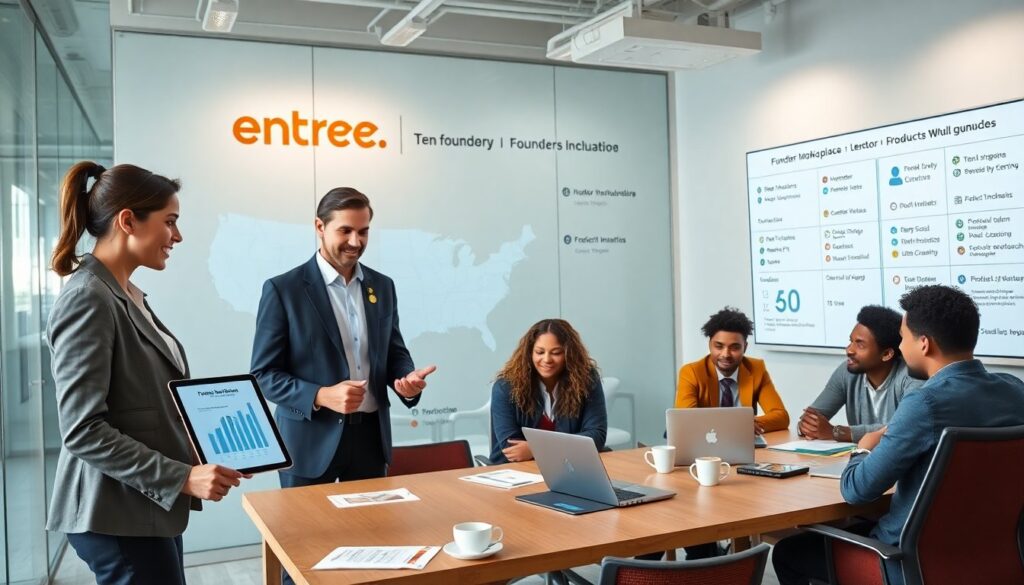
Entretech .org helps founders from underrepresented groups start and grow tech companies. The organization funds programs, runs incubators, and connects founders to mentors and investors. It focuses on practical skills, early capital access, and regional networks. This introduction outlines what entretech.org does, who it serves, the programs it runs, how to join, and how it measures results.
Key Takeaways
- Entretech.org empowers underrepresented founders by providing access to early capital, mentorship, and practical startup skills through incubators and grant programs.
- The organization focuses on diverse communities including women, LGBTQ+ entrepreneurs, veterans, and sectors like software, gaming, health tech, and climate tech in underserved metro and midsize regions.
- Founders can easily apply to entretech.org’s programs via a streamlined online process and participate in workshops on essential topics like fundraising and hiring.
- Entretech.org partners with community colleges, civic groups, and accelerators to expand its outreach and connect founders to vital regional networks.
- Impact is transparently measured and reported annually, showcasing success stories, capital raised by alumni, jobs created, and broad geographic reach.
- Corporate and community partners play a key role by providing financial support, workshops, and services, enhancing entretech.org’s mission to scale tech startups from underrepresented groups.
What Is EntreTech.org? Mission, History, And Core Focus Areas
entretech.org began as a local effort to support diverse founders. It grew into a national nonprofit by 2020 and scaled programs through partnerships. The mission states that entretech.org will expand access to startup resources for founders who face barriers to capital and networks. The organization lists core focus areas as incubation, mentorship, funding access, and workforce development. Staff members track regional gaps and adjust programs. Board members include entrepreneurs, academics, and investors who set priorities. Donors and corporate partners provide cash and in-kind services to support those focus areas.
Who EntreTech.org Serves: Communities, Industries, And Geographic Reach
entretech.org serves founders from underrepresented racial groups, women, LGBTQ+ entrepreneurs, and veterans. It serves early-stage startups in software, gaming, health tech, and climate tech. The nonprofit focuses on metro and midsize regions that lack venture capital density. It runs local hubs in ten states and remote programs that reach other states. The team measures outreach by tracking cohort demographics, industry spread, and zip-code concentration. It partners with community colleges, civic groups, and accelerators to reach founders who would otherwise miss startup networks. It also supports entrepreneurs in esports and performance tech and links to health guidance like the “five pillars of health” for athlete-focused founders.
Core Programs And Resources Offered
entretech.org runs programs that address early-stage needs. The programs include incubators, mentorship networks, grant programs, and investor introductions. Staff deliver workshops on product-market fit, fundraising, and hiring. The nonprofit also offers digital resources and a mentor marketplace that matches skill sets to founder needs.
How To Access Services Or Partner With EntreTech.org
entretech.org accepts applications to incubators and grants on a rolling basis. Founders apply through a short online form and a two-step interview process. Partners contact the partnerships team to propose workshops, sponsorships, or resource contributions. Corporate partners often supply matching funds, guest instructors, or pro bono services. Community groups can request on-site workshops by submitting a partnership request form. The nonprofit publishes eligibility criteria and a timeline on its programs page. Applicants who need help can join an introductory webinar that explains the application steps.
Measuring Impact: Success Stories, Metrics, And How They Report Results
entretech.org reports outcomes each year in a public impact report. The report lists metrics such as number of founders served, capital raised by alumni, jobs created, and geographic reach. It highlights success stories with company names, funding rounds, and hiring milestones. The nonprofit audits outcomes and uses third-party evaluators for select programs. It publishes data dashboards for transparency and posts updates on program cohorts. Funders review those dashboards before allocating new grants. Readers can view case studies that show how alumni used mentoring, funding, and community networks to scale their startups.